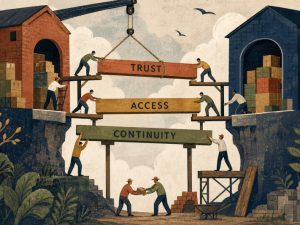

Electricity, water, transport, and industrial operations now depend on connected systems that were never designed for today’s threat environment. A Critical Infrastructure Cyber Attack is no longer just an IT problem contained inside a server room. In many cases, it can interrupt physical operations, delay essential services, and create safety concerns that reach far beyond the organization itself. That shift is forcing executive teams to view cyber risk as part of business continuity, not just technical defense.
Operations are now part of the attack surface
Critical infrastructure environments often combine legacy operational technology, modern cloud platforms, third-party access, and remote management tools. That mix improves efficiency, but it also creates blind spots between IT and operational teams. An attacker does not need to disrupt every system to cause serious damage. A single compromised credential, misconfigured remote connection, or unpatched asset can be enough to halt production, interrupt service delivery, or affect public trust.
The business impact is usually immediate. Downtime in critical infrastructure can trigger contractual penalties, regulatory scrutiny, incident response costs, and reputational damage at the same time. More importantly, these environments often support services that communities and supply chains rely on every day. When leaders evaluate cyber risk in this sector, the real question is not only how data is protected, but how essential operations keep running under pressure.
Traditional security models often miss operational realities
Many organizations still rely on security strategies built primarily for corporate IT environments. That approach leaves gaps when applied to industrial systems, utilities, transport networks, or other high-availability environments. Standard patching cycles may not be practical. Asset visibility may be incomplete. Response procedures may focus on restoring files, while the larger challenge is restoring safe and stable operations.
Another common issue is fragmentation. Security, operations, compliance, and executive leadership may all assess the same risk differently. As a result, investment decisions can become reactive. Organizations add tools after an incident, but do not always build the coordination needed to detect threats early, contain them quickly, and recover with minimal disruption.
What security leaders should prioritize
Reducing risk in critical infrastructure starts with a clear view of operational dependencies. Security teams need to understand which systems support essential processes, where remote access exists, and which assets would cause the greatest disruption if compromised. That business context helps organizations set priorities rather than trying to protect everything in the same way.
- Improve visibility across both IT and operational environments.
- Limit and monitor privileged and third-party access.
- Segment critical systems to reduce lateral movement.
- Build incident response plans around operational recovery, not only technical cleanup.
- Test resilience regularly through validation, tabletop exercises, and recovery drills.
These steps matter because resilience is not measured by prevention alone. It is measured by how quickly an organization can detect abnormal activity, contain the impact, and restore essential services without creating further risk. In critical infrastructure, response speed and coordination often matter as much as the security controls themselves.
Technology decisions should support continuity
There is no single product that solves this challenge. Most organizations need a combination of visibility, access control, threat detection, segmentation, backup strategy, and incident readiness. The right mix depends on the environment, regulatory obligations, operational tolerance for downtime, and the maturity of internal teams. That is why technology decisions in this space should begin with operational requirements and risk exposure, not product categories alone.
Organizations evaluating solutions for critical infrastructure security can benefit from working with a partner that understands both the business stakes and the technology landscape. Terrabyte helps enterprises assess cybersecurity options across multiple vendors, align security investments with operational priorities, and choose solutions that support resilience before an incident becomes a business crisis.
FAQ
What makes critical infrastructure attacks different from standard cyber incidents?
They can affect physical operations, public services, safety, and regulatory obligations at the same time, which raises the business impact significantly.
Is compliance enough to reduce the risk?
Compliance helps create structure, but it does not guarantee readiness against active threats. Organizations still need visibility, tested response plans, and controls aligned to real operational risk.
When should organizations review their current security approach?
Any major change in remote access, plant connectivity, third-party integration, or regulatory exposure is a strong signal that the current approach should be reassessed.